


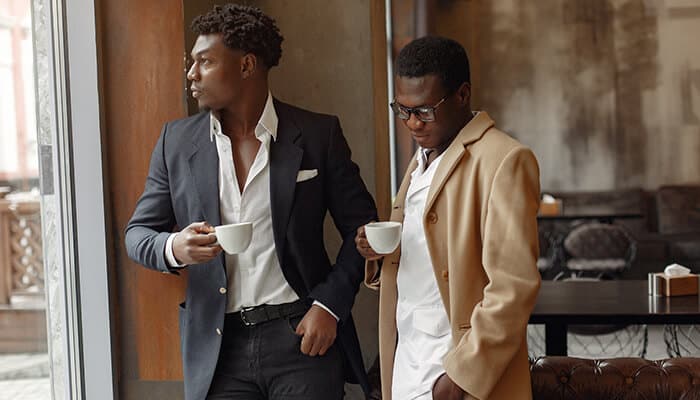

Business casual is no longer a dress code. It is a psychological tool. In 2026, mens business casual outfits define how you are perceived before you speak, negotiate, present, or lead.
Your clothing silently communicates ambition, discipline, intelligence, and cultural awareness. In corporate offices, it signals reliability. In startups, it signals modern authority. In hybrid workspaces, it signals adaptability.
Most men misunderstand business casual because they treat it as a checklist instead of a strategy.
This guide is different.
You will learn:
- The psychology behind modern office style
- The exact pieces that build authority
- Industry-specific frameworks
- Seasonal systems
- Conversion-focused buying strategy
- Brand recommendations
- Mistakes that quietly sabotage careers
- How to build a capsule wardrobe that scales with income
Let’s begin.
The Psychology Behind Business Casual in 2026
Clothing shapes perception in under seven seconds. Research in behavioral psychology consistently shows that structured clothing increases perceived competence and leadership credibility. That means your blazer fit, trouser break, and shoe choice affect how seriously you are taken.
Mens business casual outfits sit at the intersection of approachability and authority. Too formal, and you appear rigid. Too casual, and you appear unserious.
The modern workplace rewards balance.
In 2026:
- Corporate environments expect refined business casual attire.
- Startups expect structured but relaxed business casual men outfits.
- Creative industries expect expressive but disciplined Smart Casual Dress Code interpretations.
The winning strategy is intentional calibration.
What Business Casual Actually Means Today
Business casual has evolved from “no tie required” to a structured flexibility model.
It is no longer simply business professional attire minus the jacket.

Modern business casual attire typically includes:
- Tailored trousers or refined chinos
- Structured or semi-structured blazers
- Premium button-down shirts or knit polos
- Leather loafers, derbies, or minimal sneakers
- Subtle accessories
The difference between business professional attire and business casual dress code men standards is rigidity.
| Category | Business Professional | Business Casual |
| Suit | Required | Optional |
| Tie | Standard | Rare |
| Sneakers | Never | Sometimes |
| Fabric Flexibility | Low | Moderate |
| Expression | Conservative | Controlled |
Understanding this distinction prevents overdressing and underdressing mistakes.
The 2026 Business Casual Hierarchy
Not all business casual is equal.
There are levels.
Level 1: Executive Business Casual
Used in finance, consulting, and leadership meetings.
- Structured wool blazer
- Pressed wool trousers
- Crisp Oxford shirt
- Leather derbies
Level 2: Corporate Standard
Used in most office environments.
- Blazer optional
- Tailored chinos
- Oxford or knit polo
- Loafers
Level 3: Startup Modern
Used in tech and innovation spaces.
- Unstructured blazer
- Knit polo or premium tee under a blazer
- Slim chinos
- Minimal leather sneakers
Your industry determines your base level. Your ambition determines whether you dress one level above expectation. That is how career acceleration begins.
Core Wardrobe Architecture: The Foundation of Authority
You cannot build powerful mens business casual outfits without structure.
Here is the core architecture every ambitious professional needs:
Blazers (2 Minimum)
- Navy structured wool blazer
- Charcoal or textured secondary blazer
Why it matters:
The blazer frames the shoulders and creates a V-shaped silhouette associated with leadership.
Trousers (3–4 Rotation Pieces)
- Charcoal wool trousers
- Navy or mid-gray wool trousers
- Beige or olive chinos
- Optional seasonal lightweight pair
Fit is non-negotiable.
Tailoring is mandatory.
Shirts (5–7 Rotation Pieces)
- White Oxford
- Light blue Oxford
- Subtle stripe
- Two knit polos
- Seasonal fabric variation
Shirts form the base of all business casual men outfits.
Footwear (2–3 Core Pairs)
- Brown leather loafers
- Dark brown or black derbies
- Minimal white or brown leather sneakers (startup only)
Shoes are perception multipliers. Cheap shoes downgrade expensive outfits instantly.
Seasonal Authority System
Business casual men summer styling differs significantly from winter layering.
The mistake most men make is simply removing layers instead of adjusting fabric.
Summer Strategy
- Lightweight tropical wool trousers
- Breathable cotton or linen blends
- Loafers without heavy socks
- Lighter tonal palette
Avoid: Heavy synthetic blends that trap heat and wrinkle visibly.
Winter Strategy
- Merino wool sweaters
- Layered blazer over knit
- Structured overcoat
- Textured fabrics like flannel
Winter is an opportunity. Layering increases visual depth and authority.
Industry-Specific Style Intelligence
Finance & Consulting
Your mens business casual outfits should lean toward business professional attire standards.
Recommended formula:
- Navy blazer
- White shirt
- Charcoal trousers
- Dark brown derbies
Avoid experimentation. Consistency equals credibility.
Technology & Startups
Startup environments allow modern interpretation of business casual ideas.
Recommended formula:
- Unstructured blazer
- Knit polo
- Slim chinos
- Leather minimalist sneakers
Balance innovation with discipline.
Creative Industries
You may introduce texture and color within business casual attire.
Recommended formula:
- Textured blazer
- Patterned but subtle shirt
- Neutral trousers
- Suede loafers
Creative does not mean careless.
The Capsule Strategy for Scalable Wardrobes
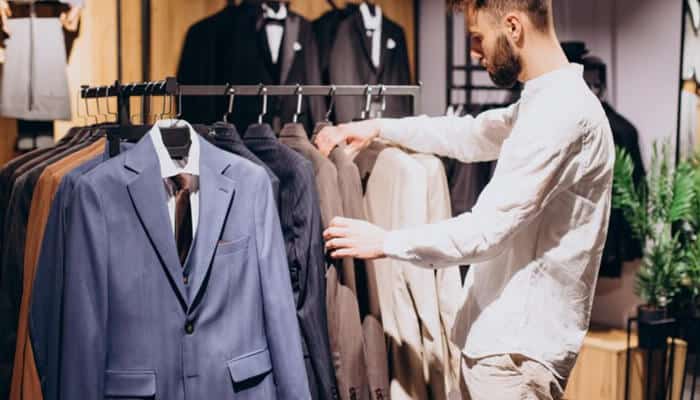
High-performing professionals reduce decision fatigue.
A capsule approach ensures:
- Every piece works with three others
- Colors coordinate automatically
- Dressing becomes effortless
| Category | Quantity | Purpose |
| Blazers | 2 | Structure |
| Trousers | 4 | Rotation |
| Shirts | 6 | Base layers |
| Knitwear | 2 | Seasonal depth |
| Shoes | 3 | Versatility |
This system supports 25+ outfit combinations.
Conversion Block: Smart Buying Strategy
If your goal is long-term authority, follow this staged purchasing framework.
Stage 1: Foundation
Invest in:
- Navy blazer
- Charcoal trousers
- White Oxford
- Brown loafers
These four pieces create multiple mens business casual outfits immediately.
Stage 2: Expansion
Add:
- Secondary blazer
- Knit polos
- Seasonal trousers
Stage 3: Refinement
Upgrade to premium fabrics from the Best Men’s Business Casual Brands for the Office in 2026.
Focus on:
- Italian wool
- Full-grain leather
- Tailoring precision
This staged approach supports affiliate product integration naturally.
Mistakes That Quietly Damage Your Professional Image
Even expensive wardrobes fail when fundamentals are ignored.
Common errors:
- Poor fit
- Wrinkled fabrics
- Overly tight silhouettes
- Athletic sneakers in formal offices
- Excessive accessories
Business casual dress code men standards require restraint.
Power Dressing Psychology in Modern Business Casual
Mens business casual outfits influence authority perception more than most professionals understand.
Clothing triggers subconscious judgments about competence, intelligence, and leadership.
Three psychological drivers define powerful business casual attire:
1. Structure Signals Leadership
Blazers, sharp shoulder lines, and tailored trousers create geometric structure.
Humans associate structured silhouettes with discipline and decisiveness. This is why business professional attire historically relied on suits. Modern mens business casual outfits maintain structure without full formality.
2. Texture Signals Sophistication
Wool, suede, brushed cotton, and merino knitwear communicate refinement. Flat synthetic fabrics feel transactional. Textured fabrics feel intentional. In startup environments especially, texture differentiates modern authority from rigid corporate styling.
3. Fit Signals Self-Respect
Oversized garments project disengagement. Overly tight garments project insecurity. Balanced tailoring communicates confidence. Every powerful business casual men outfits strategy begins with fit.
Body Type Optimization Strategy
Most style guides ignore body structure completely. That is a mistake. Mens business casual outfits must adapt to body proportions to maximize presence.
Athletic Build
Focus on:
- Structured blazers with slight waist suppression
- Straight-leg trousers
- Avoid excessive taper
This prevents bulk exaggeration.
Slim Build
Focus on:
- Layering for dimension
- Slightly textured fabrics
- Mid-weight trousers
This creates visual strength.
Broad Midsection
Focus on:
- Structured shoulders
- Mid-rise trousers
- Avoid clingy knitwear
Vertical lines elongate the silhouette.
Tall Frame
Focus on:
- Balanced proportions
- Avoid overly short jackets
- Consider cuffed trousers for grounding
Small tailoring adjustments dramatically change how business casual attire presents authority.
Advanced Color Psychology for 2026
Color choice affects emotional perception. In mens business casual outfits, color must align with professional goals.
Navy: Controlled Authority
- Signals trust
- Strong executive presence
- Safer than black
Ideal for finance and consulting.
Charcoal: Precision and Control
- More formal than navy
- Approaches business professional attire territory
Excellent for presentations.
Beige and Earth Tones: Approachability
- Popular in business casual men summer styling
- Ideal for startup and creative spaces
Signals innovation without aggression.
Olive and Muted Greens: Modern Intelligence
- Sophisticated but understated
- Works well in tech environments
Avoid loud tones in conservative corporate settings.
Fabric Intelligence: The Hidden Upgrade
Most articles stop at “wear wool.” That is incomplete.
Fabric weight, weave, and drape define silhouette integrity.
Wool (Super 110–130)
- Ideal for year-round mens business casual outfits
- Maintains shape
- Drapes cleanly
Tropical Wool
- Breathable
- Ideal for business casual men summer
Merino Knit
- Lightweight layering
- Elevates Smart Casual Dress Code combinations
Avoid Excessive Polyester Blends
- Wrinkles unevenly
- Looks flat under office lighting
Fabric quality separates premium business casual attire from disposable fashion.
Ready-to-Copy Mens Business Casual Outfits
These combinations increase dwell time and practical value.
Corporate Authority Looks
- Navy blazer + white Oxford + charcoal trousers + brown derbies
- Charcoal blazer + light blue shirt + navy trousers + loafers
- Textured navy blazer + striped shirt + gray trousers + dark loafers
Modern Startup Executive Looks
- Unstructured blazer + knit polo + slim chinos + leather sneakers
- Navy knit sweater + gray chinos + brown loafers
- Olive blazer + white tee + charcoal trousers + minimal sneakers
Summer Precision Looks
- Beige chinos + light blue shirt + brown loafers
- Lightweight blazer + knit polo + gray trousers
- Open collar Oxford + navy trousers + loafers
Winter Layered Authority Looks
- Charcoal overcoat + navy blazer + white shirt + gray trousers
- Merino sweater + blazer + tailored trousers
- Wool trousers + knit polo + structured coat
Luxury vs Mid-Range vs Budget Brand Positioning
Brand perception influences professional credibility. Professionals seeking the Best Men’s Business Casual Brands for the Office in 2026 must consider:
- Fabric sourcing
- Construction quality
- Fit consistency
- Brand perception in the industry
Luxury Tier
- Italian tailoring
- Premium wool mills
- Strong drape retention
Ideal for executives and leadership roles.
Mid-Range Tier
- Balanced cost-to-quality ratio
- Good for scaling the wardrobe
Strong for managers and consultants.
Budget Tier
- Entry-level professionals
- Focus on tailoring adjustments
Even budget mens business casual outfits can look premium with proper fit.
Grooming and Presentation Upgrade
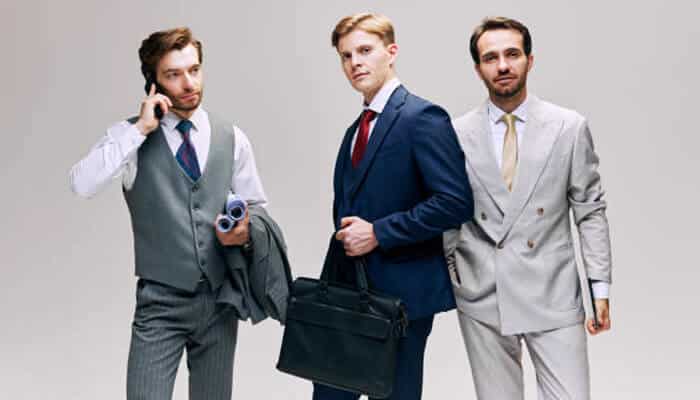
Wardrobe without grooming alignment reduces impact.
Key rules:
- Clean haircut every 3–4 weeks
- Neutral fragrance
- Polished shoes
- Trimmed facial hair
Business casual men outfits require holistic presentation.
The Silent Career Multiplier
Mens business casual outfits function as silent leverage.
They increase:
- Meeting confidence
- Client perception
- Promotion readiness
- Executive presence
Clothing cannot replace competence. But it amplifies it.
Dressing for Promotion, Not Position
One of the most powerful principles in business casual attire is this:
Dress one level above your current role. Executives subconsciously evaluate leadership readiness based on presence.
Mens business casual outfits that signal structure, polish, and composure communicate upward mobility.
If you work in a startup wearing relaxed business casual men outfits daily, elevate slightly:
- Add a blazer more often
- Upgrade footwear quality
- Improve fabric texture
- Sharpen tailoring
If you work in a corporate setting governed by business professional attire standards, maintain structured discipline consistently.
Promotion perception is built through repetition.
The Income-Level Investment Roadmap
To create a scalable wardrobe, professionals must align spending with income growth.
Here is a structured roadmap for building mens business casual outfits strategically.
Entry-Level Professionals
Focus on foundation.
Priority purchases:
- Navy blazer
- Charcoal trousers
- White Oxford shirt
- Brown leather loafers
Budget allocation should prioritize tailoring adjustments over brand prestige.
A well-fitted, affordable garment outperforms an ill-fitted, expensive one.
Mid-Level Managers
Expand versatility.
Add:
- Secondary textured blazer
- Merino knitwear
- Seasonal trousers
- Upgraded leather footwear
At this stage, business casual men outfits should reflect confidence and consistency.
Senior Leadership
Invest in fabric quality and construction.
Upgrade to:
- Italian wool blazers
- Full-grain leather shoes
- Precision tailoring
- Subtle luxury accessories
Here, business casual attire should quietly approach business professional attire refinement.
Authority at this level is understated.
Advanced Layering Matrix for Maximum Impact
Layering is the hidden skill behind elite mens business casual outfits.
Here is a structured matrix to maximize combinations without overcrowding your wardrobe.
Base Layer Options
- White Oxford
- Light blue shirt
- Knit polo
- Fine merino sweater
Mid Layer Options
- Navy blazer
- Charcoal blazer
- Lightweight cardigan
- Structured overshirt
Outer Layer Options
- Wool overcoat
- Structured trench
- Minimal topcoat
When layered intentionally, four base pieces can generate over twenty business casual men outfits.
Layering adds depth, authority, and climate adaptability.
The Top Five Mistakes That Block Leadership Perception
Even strong wardrobes fail when subtle mistakes undermine perception. Avoid these consistently:
1. Poor Sleeve Length
Jacket sleeves that swallow hands instantly downgrade presence.
2. Excessive Trend Adoption
Trends date quickly. Authority is timeless.
3. Ignoring Footwear Condition
Scuffed shoes sabotage polished business casual attire.
4. Fabric Shine from Cheap Blends
Under office lighting, synthetic sheen looks inexpensive.
5. Inconsistent Grooming
Mens business casual outfits require aligned grooming discipline.
Small details separate mid-level from executive presence.
Business Casual vs Smart Casual: Final Clarity
Many professionals still confuse these categories.
Here is the definitive distinction:
| Element | Business Casual | Smart Casual |
| Structure | Required | Flexible |
| Sneakers | Limited | Common |
| Blazer | Frequent | Optional |
| Shirt Type | Structured | Flexible |
| Formality Level | Medium | Low-Medium |
Smart Casual Dress Code allows more experimentation. Business casual dress code men standards require intentional restraint. When uncertain, lean toward structure.
High-Conversion Buying Framework
To convert readers into confident buyers, we structure wardrobe building in phases.
Phase 1: Stability
Build three dependable mens business casual outfits immediately using foundational pieces.
Phase 2: Authority Expansion
Introduce texture, secondary color palettes, and layered sophistication.
Phase 3: Refinement and Brand Elevation
Research the Best Men’s Business Casual Brands for the Office in 2026 based on:
- Fabric sourcing
- Stitch density
- Fit reliability
- Return policies
- Brand perception within your industry
Luxury branding is optional. Quality construction is not.
Frequently Asked Questions (Featured Snippet Optimized)
1. What qualifies as business casual for men in 2026?
Business casual attire includes tailored trousers, structured blazers, refined shirts or knit polos, and polished leather footwear.
2. Are sneakers acceptable in mens business casual outfits?
Minimal leather sneakers may align with startup environments but rarely fit conservative corporate business professional attire standards.
3. How many outfits should a professional own?
A capsule wardrobe supporting twenty to thirty business casual men outfits ensures rotation without excess spending.
4. Is business casual men summer styling less formal?
Seasonal adjustments use lighter fabrics but maintain structure, color discipline, and tailoring integrity.
5. Can business casual attire lead to better career perception?
Yes. Structured and polished mens business casual outfits positively influence leadership perception and promotion readiness.
The Final Authority Statement
Mens business casual outfits are not about fashion trends. They are about narrative control. Your clothing tells a story before you speak. It signals whether you are disciplined or distracted. Prepared or passive. Promotable or plateaued.
In 2026, modern office style belongs to professionals who understand structure, psychology, and strategic investment. Master business casual attire deliberately. Dress slightly above expectations. Maintain discipline in fit, fabric, and footwear. Your wardrobe should never beg for attention. It should command respect quietly.
