


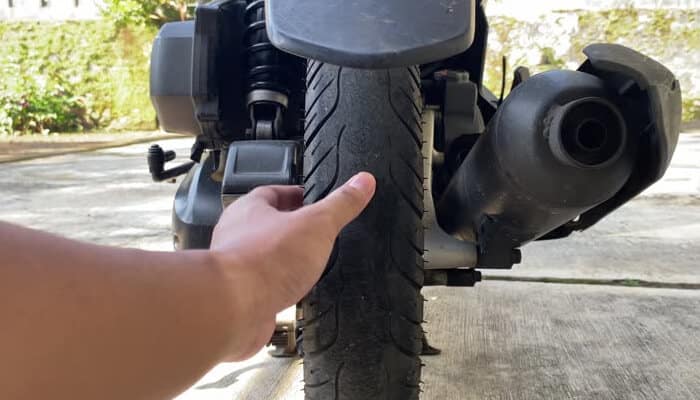

Worn equipment degrades your vehicle’s mechanical response, causing a sudden, serious blowout at high speeds. Most casual cycling fans don’t even notice the tread deterioration on their bike tyres until a major component failure leaves them miles from home.
Knowing early signs of deterioration and managing them helps you keep control and protect your wheels from structural damage. This article examines the telltale signs your bike tyres need replacement.
1. Complete Disappearance of the Central Tread Pattern
As you drive miles over rough asphalt or gritty gravel, friction gradually sands away the raised rubber ridges. On commuter wheels, this process means a flat spot on the centre line, and mountain variants lose their prominent centre knobs.
Loss of this structure has a drastic effect on the grip of your car, particularly in wet or muddy spots. Your wheels will not be able to keep water away from the contact patch, so it will be a hazard of hydroplaning. If the centre of your wheel looks smooth, it is time to upgrade your rubber components.
2. Frequent and Unexplained Punctures During Normal Rides
It’s common for a piece of road debris or construction glass to leave a hole in your tyre while you cycle. But if you suddenly have multiple flats in a short span of two weeks, then the rubber compound is probably thin. As the outer casing wears thin, sharp thorns and tiny wire fragments can pass straight through to the inner tube.
Examining Bike tyres for thinning is the best course of action when your daily dependability starts to decline. Replacing the thin casings entirely restores your mechanical peace of mind and keeps your weekly commutes completely on schedule.
3. Excessive Cracking Along the Outer Side Walls
Bicycle rubber degrades with time due to harsh environmental forces such as UV light, extreme temperature shifts, and ozone pollution. These conditions drain the essential oils from the rubber compound, leaving it brittle and dry. You will see spiderweb cracks along the sidewall fabric long before the tread completely disappears.
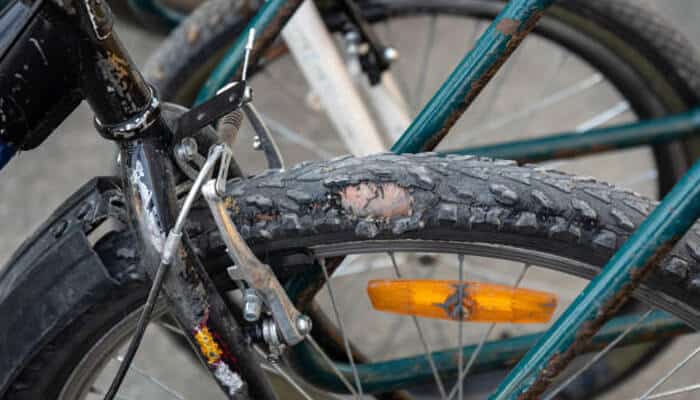
When rubber is dry-rotted, it loses its elasticity and is very susceptible to sudden structural tears under high inflation pressure. Do not try to ride on dry-rotted rubber, because it can fail suddenly and violently without any warning.
4. Noticeable Blistering or Bulging Under Normal Inflation
When the nylon cords woven inside a wheel break down, air pressure pulls the outer rubber out of the wheel. This results in an unsightly bulge, lump, or blister anywhere along the tread or sidewall. There is a major problem with the structure inside that can’t be fixed or patched up normally.
Riding on a blistered wheel is a very unstable, thumping feeling through your handlebars or saddle as it turns. More importantly, that localised bulge is a huge weak spot that can burst open with the hit of a small pothole.
5. Uneven Flat Spots Caused by Aggressive Skidding
If you disable your brakes during an emergency stop, one piece of rubber scraping heavily against the road surface can flatten the tread and shear several layers of rubber. That flat spot can quickly damage the entire wheel, even if the rest of the wheel looks new.
A severe flat spot is also very noticeable during rapid descents and makes your steering feel very unstable. It means that the casing is very thin there, and the next time you brake hard, you can tear it right away. After any major skidding incident, inspect your tread to make sure the contact surface remains round.
6. A Loose and Sloppy Fit Against the Metal Rim
With years of hard use and repeated mounting cycles, the internal wire or Kevlar beads running along the tyre edge can stretch out. This makes it look like it would be too easy and loose to attach the product to the metal wheel structure. A loose bead is very dangerous because when you turn sharply, the tyre can come off the rim completely.
Your tyre bead must snap tightly and firmly into the rim’s hooked channels to handle high cornering loads safely. If the tyre slips off the wheel structure easily without tyre levers, the structural bead has lost its tension.
Prioritising Your Personal Riding Safety
New rubber casings are the most cost-effective performance enhancement for your bicycle. You can fix worn gear and avoid roadside flats and get sharp, predictable handling in your steering setup. It gives you a sure shot to push your physical limits on the road or trail. Refresh your equipment now and ride an entirely new and safe ride today.
