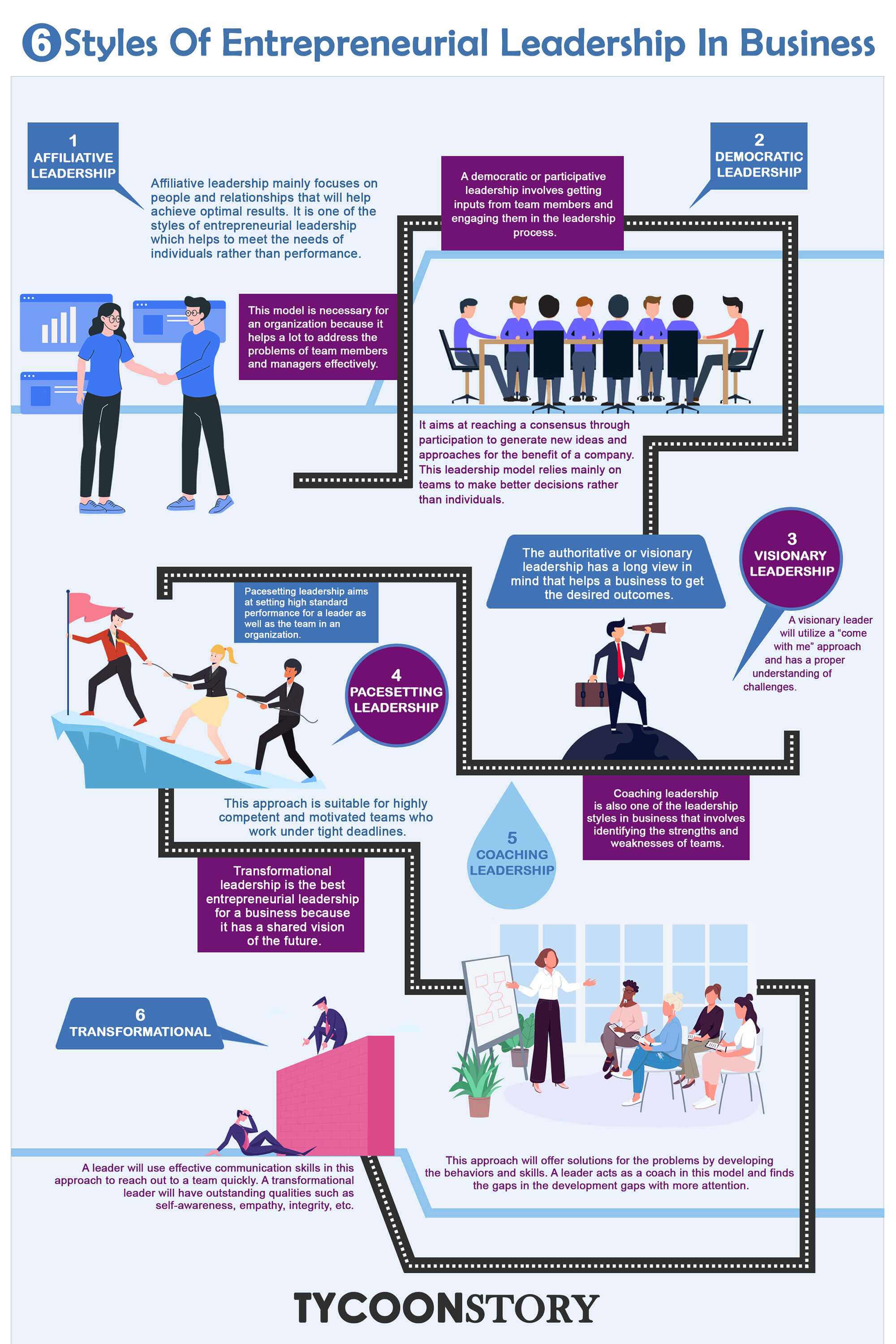
A strong leader can influence and change the working environment in a business. He or she will have unique qualities and help a business attain top positions. Leadership involves several things that allow a business to improve productivity. However, entrepreneurial leadership involves different styles, and business owners should know where they are. Not only that, they can improve their skills effectively, which will benefit a business in several ways. Furthermore, an entrepreneur can get more ideas about different styles and ways to make changes accordingly.
Affiliative leadership mainly focuses on people and relationships that will help achieve optimal results. It is one of the styles of entrepreneurial leadership that helps to meet the needs of individuals rather than performance. This model is necessary for an organization because it helps a lot to address the problems of team members and managers effectively. This model provides feasible ways to establish trust and creditability among employees or groups when they face a crisis in the workplace. The primary advantage of affiliative leadership is that it provides ways to create a better working environment in an organization.
Democratic or participative leadership involves getting input from team members and engaging them in the leadership process. It aims at reaching a consensus through participation to generate new ideas and approaches for the benefit of a company. This leadership model relies mainly on teams to make better decisions than individuals. It works well for a company that is looking for change and an agile workforce. At the same time, democratic leadership works only if the teams are highly competent.
Authoritative or visionary leadership has a long view in mind that helps a business get the desired outcomes. It provides ways to motivate employees and teams while planning important activities. A visionary leader will utilize a “come with me” approach and have a proper understanding of challenges. This model is one of the best styles of entrepreneurial leadership because it has a clear vision for achieving success. The leadership offers guidance to teams and employees on how to maintain a positive attitude in the workplace.
Pacesetting leadership aims at setting high standards of performance for a leader as well as the team in an organization. This approach is suitable for highly competent and motivated teams who work under tight deadlines. It is one of the leadership styles in business that will help enhance the skills of a team. A leader will lead by example in this approach and stick to activities better. Furthermore, he or she may expect the same outputs from teams when they are highly motivated and skilled. The model is very effective in small group settings and can increase performance levels.
Coaching leadership is also one of the leadership styles in business that involves identifying the strengths and weaknesses of teams. This approach will offer solutions to the problems by developing behaviors and skills. A leader acts as a coach in this model and finds the gaps in development with more attention. He or she will work closely with teams to address their issues as soon as possible while planning important activities.
Transformational leadership is the best entrepreneurial leadership for a business because it has a shared vision of the future. Also, a leader will use effective communication skills in this approach to reach out to a team quickly. A transformational leader will have outstanding qualities such as self-awareness, empathy, integrity, etc. All of them enable a business to increase its productivity and growth to a large extent.
If there is one promotion that has genuinely transformed the way Malaysian players approach online slot gaming, it is slot…
The first step to having a safe financial future is to find the appropriate location to keep your money. There…
Parenting in the modern world is evolving rapidly. Parents are balancing work, technology, emotional development, and education while trying to…
Parenting in the digital age has become more complex than ever. With social media influence, evolving educational systems, and increasing…
Motherhood has always been one of the most transformative journeys in human life. In recent years, however, the rise of…
Understanding how credit repair works can help individuals improve their financial health and open doors to better borrowing opportunities. The…